
-
Matte Black
-
Chrome
-
Brushed Gold
-
Brushed Nickel
- + 1
-
Brushed Gold
-
Matte Black
-
Brushed Nickel
-
Brushed Gold
-
Matte Black
-
Brushed Gold
-
Brushed Nickel
-
Chrome
-
Matte Black
9 Outdoor Shower Ideas for Backyards, Pools & Patios
A good outdoor shower earns its place because people actually use it. It might sit beside the pool, near a side entrance, next to a garden path, or outside a beach house where sand, sunscreen, and wet feet are part of daily life.
Before thinking about tile, wood, plants, or finishes, it helps to answer a simpler question: where would an outdoor shower make the day easier? In many homes, the best spot is not the most dramatic corner of the yard. It is the place people naturally pass after swimming, gardening, walking back from the beach, or rinsing off pets.
The outdoor shower ideas below focus on real use first, then style. Some work well for compact patios, some for open pool decks, and some for private garden spaces. The right choice depends on location, privacy, drainage, and how often the shower will be used.
Start with the Spot, Not the Fixture
If the shower will sit against a wall, fence, or pool house, a wall-mounted outdoor shower usually keeps the layout simple. If it will stand in an open pool area or garden, a freestanding shower often feels more natural.
Once the location makes sense, the style becomes much easier to choose.
1. Rustic Wooden Outdoor Showers
Wood is one of the easiest ways to make an outdoor shower feel warm and natural. A wooden privacy screen or slatted enclosure works especially well beside a garden, pool deck, stone path, or cabin-style outdoor space.
Cedar, teak, and other outdoor-friendly woods pair well with stone, greenery, and simple metal fixtures. The goal is to make the shower feel like part of the yard, not like an indoor bathroom moved outside.
Best for: garden showers, rustic patios, poolside corners, and homes with natural landscaping.
Fixture note: A clean wall-mounted outdoor shower usually works well here because the wood and stone already carry most of the design. Matte black, brushed nickel, or stainless steel finishes can all look natural depending on the surrounding materials.

2. Modern Minimalist Outdoor Showers
A modern outdoor shower usually looks best when the design is kept simple. Clean lines, a concrete or stone base, and a slim shower column can give the space a calm, architectural feel.
This style is a good match for rooftop terraces, modern pool areas, and small patios where too many decorative details would make the space feel crowded.
Best for: open pool decks, contemporary patios, modern backyards, and outdoor spaces with simple materials.
Fixture note: For an open area without a nearby wall, a freestanding outdoor shower is often the cleaner choice. It can stand on its own without needing a heavy wall or enclosure behind it.

3. Tropical Retreat Showers
If you want the space to feel more relaxed, build the shower around greenery. Bamboo fencing, broad-leaf plants, natural stone, and a rainfall showerhead can make a backyard corner feel closer to a private resort shower.
This style works especially well when the shower is slightly tucked away instead of placed in the center of the yard. Plants can provide privacy without making the area feel closed in.
Best for: garden corners, poolside landscaping, warm-climate homes, and outdoor spaces where privacy can be created with planting.
Small detail that helps: add a few hooks, a towel rail, or a small shelf nearby. It makes the shower feel finished instead of temporary.

Where an Outdoor Shower Makes the Most Sense
| Location | Why it works | What to look for |
|---|---|---|
| Poolside | Swimmers can rinse before and after using the pool. | Easy access, slip-resistant surface, and durable outdoor fixture. |
| Side entrance | Helps keep sand, mud, grass, and wet feet outside. | Handheld spray or lower rinse point. |
| Garden path | Useful after gardening, yard work, or rinsing tools. | Good drainage and plants that tolerate splashing. |
| Open deck | The shower can become part of the outdoor layout. | Freestanding design and a clean base. |
4. Wall-Mounted Showers with Privacy Screens
A wall-mounted outdoor shower is one of the most practical choices when space is limited. It can be installed against an exterior wall, pool house, fence structure, or side-yard surface.
To make it feel more private, add a wood screen, metal panel, outdoor curtain, or partial enclosure. The goal is not always to hide the shower completely. Sometimes one simple side screen is enough to make the area feel comfortable.
Best for: side yards, compact patios, pool houses, small backyards, and exterior walls with easy water access.
Useful feature: a handheld shower makes it easier to rinse feet, pets, swim gear, and the shower floor itself. For family homes and beach houses, this small detail can matter more than a larger showerhead.

5. Garden-Integrated Outdoor Showers
A garden shower should feel like it belongs in the landscape. Instead of building a heavy enclosure, try using vines, shrubs, stone edging, or a simple trellis to soften the shower area.
This design works well for homeowners who want the shower to blend into the yard rather than stand out as a separate structure. A small platform, gravel base, or stone path can help the area feel intentional.
Best for: planted backyards, garden paths, outdoor spa corners, and homes where the shower should feel quiet rather than showy.
Before you build: check drainage and choose materials that can handle water, sun, and regular cleaning. Good drainage is just as important as the fixture itself.

6. Coastal-Inspired Outdoor Showers
For a beach house or coastal-style backyard, keep the design casual and easy to use. Whitewashed wood, simple wall hooks, a slatted floor, and a durable shower fixture can create a clean, relaxed look.
The main purpose of this style is convenience. Place the shower close to the pool, side entrance, or beach access point so people can rinse off before walking indoors.
Best for: beach houses, pool gates, side entrances, vacation homes, and families who need a quick rinse area after outdoor activities.
Fixture note: a handheld spray or lower foot rinse is especially useful here. Sand, sunscreen, wet feet, children, pets, and beach gear are easier to deal with when the shower is not just a fixed overhead spray.

Compare Outdoor Shower Setups
Once you know where the shower will go, compare the installation type before choosing the final look.
7. Outdoor Bathtub and Shower Combos
If the outdoor area is large enough, a shower and bathtub combination can turn the space into a quiet bathing retreat. The shower is useful for quick rinsing, while a freestanding bathtub creates a slower, more relaxing experience.
This idea works best in private courtyards, screened garden areas, or homes where the outdoor bath zone is designed as part of a larger landscape plan.
Best for: private gardens, guest suites, outdoor bathrooms, and homes that already have enough privacy and drainage planned.
Design note: keep privacy, drainage, and surface safety in mind. Outdoor bathing areas need materials that can handle water, sun, and regular cleaning without becoming slippery or hard to maintain.

8. Compact Corner Showers for Tight Spaces
Not every outdoor shower needs a large footprint. A compact corner shower can work on a small patio, balcony-style outdoor area, side yard, or narrow poolside walkway.
In a tight space, the best design is usually the simplest one: a wall-mounted fixture, a clean drainage surface, and one privacy panel if needed.
Best for: small patios, narrow side yards, compact pool areas, and homes where every inch of outdoor space matters.
Helpful addition: a small shelf, hook, or narrow bench can make the shower much easier to use without taking up much room.

9. Solar-Heated Outdoor Showers
In warm climates, a solar-heated outdoor shower can be a practical option for pool areas, cabins, and seasonal outdoor spaces. These showers use sunlight to warm the water, often through a dark tank or solar-assisted setup.
They are usually best for occasional rinsing rather than replacing a full indoor shower. If you want more consistent temperature control, a plumbed outdoor shower system may be the better long-term choice.
Best for: sunny backyards, pool rinsing stations, garden cabins, and casual outdoor use.
Before choosing one: think about how often the shower will be used, whether warm water is needed every time, and how drainage will be handled.

What to Consider Before Choosing an Outdoor Shower
A beautiful outdoor shower still needs to work well day after day. Before choosing a design, think through the practical details first.
- Location: place the shower close to where people naturally need it, such as a pool, garden entrance, patio, or beach-house door.
- Privacy: use screens, planting, fences, or partial walls based on how exposed the area is.
- Installation type: choose wall-mounted for compact spaces and freestanding for open layouts.
- Drainage: make sure water can move away safely and does not damage nearby surfaces.
- Material: choose fixtures and finishes designed to handle outdoor moisture, sun, and regular use.
- Daily use: if the shower will be used for pets, children, sand, or swim gear, a handheld spray or foot rinse can be more useful than a fixed showerhead alone.
A Simple Way to Narrow It Down
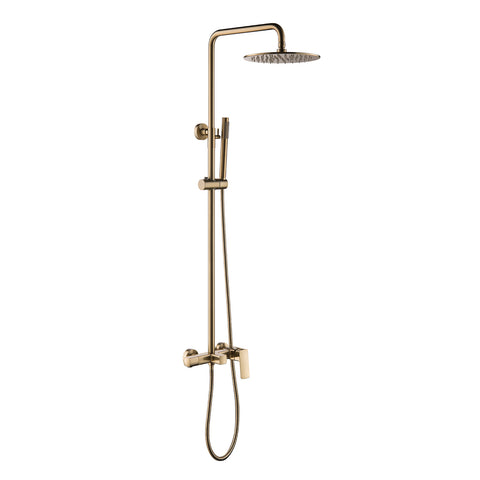
If the shower will sit against an exterior wall, fence, or pool house, start with a wall-mounted outdoor shower. If it will stand in an open pool area, patio, or garden, start with a freestanding outdoor shower. If the space will be used by children, pets, swimmers, or beach guests, look for a setup with a handheld spray or lower rinse point.
Once you know how the shower will be used, the design choice becomes much easier.
Outdoor Shower FAQs
What is the best place to install an outdoor shower?
The best location is usually close to where people need to rinse off, such as beside a pool, near a garden entrance, next to a patio, or outside a beach-house door. It should also have access to water supply and proper drainage.
Is a wall-mounted or freestanding outdoor shower better?
A wall-mounted shower is usually better for small spaces or areas with an existing exterior wall. A freestanding shower is better when you want more flexibility in an open garden, poolside, or patio layout.
Do outdoor showers need privacy screens?
Not always, but most outdoor showers feel more comfortable with at least partial privacy. A wood screen, fence panel, tall plants, or outdoor curtain can make a big difference without making the space feel closed in.
Can an outdoor shower be used near a pool?
Yes. Poolside is one of the most common places to install an outdoor shower. It gives swimmers a quick way to rinse before and after entering the pool, and it can help keep grass, dirt, and pool chemicals from being carried indoors.
What features are worth having in an outdoor shower?
For simple pool rinsing, a fixed showerhead may be enough. For beach houses, family backyards, or garden use, a handheld sprayer, lower foot rinse, durable material, and easy-to-clean surface can make the shower much more practical.
Ready to Build Your Outdoor Shower Space?
The best outdoor shower is usually the one placed where people naturally need it. If it is easy to reach, easy to rinse off, and simple to maintain, it will get used far more often than a dramatic design in the wrong spot.
Compare wall-mounted, freestanding, and multi-function outdoor showers to find a setup that fits the way your backyard, pool area, patio, or beach-house entry is used.
Find the Right Outdoor Shower for Your Space
Browse outdoor shower systems for poolside areas, patios, gardens, beach houses, and backyard upgrades.
Shop Outdoor Showers